

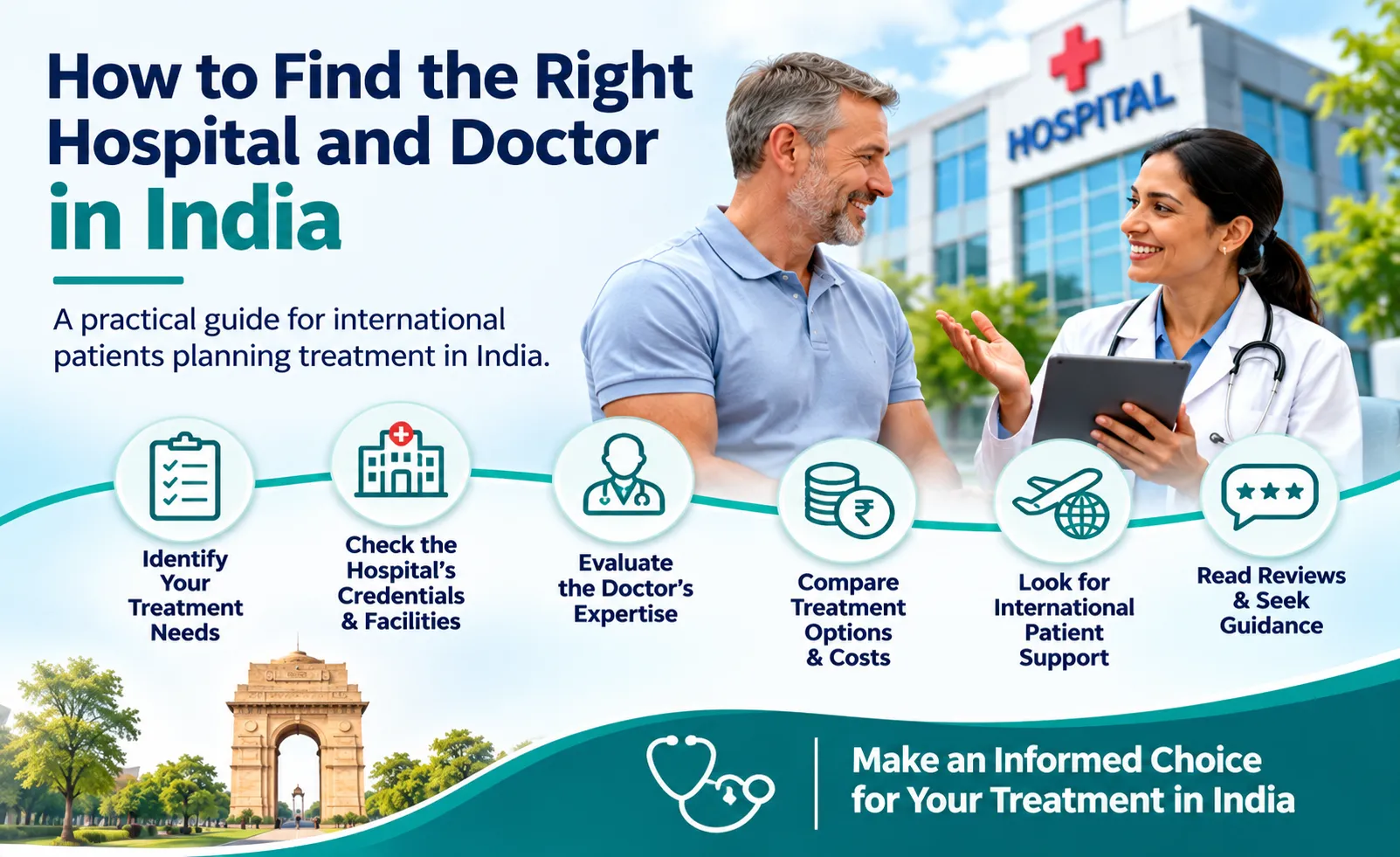
India has become a popular destination for international patients seeking advanced medical treatments, specialized healthcare services, and experienced medical professionals. With numerous multispecialty hospitals and doctors across different medical fields, choosing the right healthcare provider is an important step in planning a medical journey.
Whether you need heart surgery, cancer treatment, spine surgery, dental implants, or fertility care, selecting a suitable hospital and qualified specialist can make a significant difference to your treatment experience.
Health Tours India helps international patients explore hospitals, doctors, and medical treatment options across India.
1. Choose a Hospital Based on Your Medical Needs
Not every hospital specializes in the same medical treatments. Before selecting a hospital, identify the medical specialty and services required for your condition.
For example:
-
Cardiology: Heart surgery, angioplasty, bypass surgery, and cardiac care.
-
Neurology: Brain surgery, stroke treatment, and neurological disorders.
-
Orthopedics & Spine Care: Joint replacement, spine surgery, and spinal disorders.
-
Oncology: Cancer diagnosis, surgery, chemotherapy, and radiation therapy.
-
Nephrology: Kidney disease management and kidney transplantation.
-
Dental Care: Dental implants, root canal treatment, and smile restoration.
-
IVF & Fertility: Fertility assessments and assisted reproductive treatments.
Choosing a hospital with relevant expertise and appropriate facilities is essential for your healthcare needs.
2. Check the Doctor’s Qualifications and Experience
A qualified and experienced specialist plays an important role in diagnosis, treatment planning, and follow-up care.
Before selecting a doctor, consider the following factors:
-
Medical qualifications and professional registration
-
Specialization relevant to your condition
-
Experience with the proposed treatment or procedure
-
Current hospital affiliation
-
Approach to patient consultations and follow-up care
For complex procedures, ask how frequently the doctor and hospital perform the treatment and what outcomes and complications are typically associated with it.
3. Verify Hospital Accreditation and Medical Facilities
Hospital accreditation can help patients assess whether a healthcare facility follows recognized quality and patient safety standards.
Look for hospitals with relevant accreditation, such as NABH or JCI, and verify that the accreditation is current and applies to the facility you are considering.
Also check the availability of:
-
Advanced diagnostic equipment
-
Modern operating theatres
-
Intensive care and emergency facilities
-
Specialized medical departments
-
Infection prevention and patient safety protocols
-
Rehabilitation and post-treatment support
The right hospital is not simply the most famous one. It is the hospital that has the appropriate specialists, facilities, safety standards, and treatment options for your medical condition.
4. Compare Treatment Options and Estimated Costs
Medical treatment costs in India vary depending on the hospital, doctor, procedure, and individual medical requirements.
International patients should request a written treatment estimate before making travel arrangements.
The estimate should ideally include hospital charges, surgeon or specialist fees, diagnostic tests, medicines, expected hospital stay, and possible additional expenses.
Remember that an estimated treatment cost may change after an in-person medical assessment.
5. Check International Patient Services
International patients may require additional assistance when traveling to India for medical treatment.
Many hospitals offer international patient departments to help with treatment-related arrangements.
Depending on the hospital, services may include:
-
Appointment scheduling
-
Review of medical reports before arrival
-
Treatment cost estimates
-
Medical visa documentation support
-
Language interpretation assistance
-
Accommodation and local travel guidance
-
Post-treatment follow-up coordination
Confirm which services are available and whether additional charges apply.
6. Understand the Treatment and Recovery Process
Before finalizing a hospital and doctor, ask questions about the proposed medical procedure.
Important questions include:
-
What treatment is recommended for my condition?
-
Are there alternative treatment options?
-
What are the possible risks and complications?
-
How long will hospitalization take?
-
What is the expected recovery period?
-
When will it be medically safe to travel home?
-
How will follow-up care be managed after returning to my country?
Understanding these details helps patients prepare for their medical journey and make informed decisions.
7. Explore Hospitals and Doctors Through Health Tours India
Finding suitable healthcare options in another country can be challenging, especially when comparing different hospitals, specialists, and treatment procedures.
Health Tours India is a medical tourism platform designed to make healthcare information more accessible to international patients.
Through our website, you can:
-
Explore leading hospitals across India.
-
Discover doctors from different medical specialties.
-
Learn about advanced medical treatments.
-
Compare healthcare options based on your requirements.
-
Find useful information for planning medical travel to India.
Our goal is to help international patients make informed healthcare decisions with greater confidence.